

January 31, 2009
Where You Take Them
I fell in love with this little blurb the first time I saw it a few days ago and wanted to share it here with you...


January 28, 2009
Iraqi War Trilogy
For reasons I can’t quite explain I have doused myself in war, since the beginning of the year. In addition to reading nearly fifty articles on the genocide in Gaza and watching Waltz with Bashir and Generation Kill, I decided to set-up what I like to call the Iraqi War trilogy. Since the first of January I have read: Generation Kill by Evan Wright, The Fall of Baghdad by Jon Lee Anderson, and Standard Operating Procedure by Philip Gourevitch.
Two of the authors had impressed me before with their fluid and precise prose- Gourevitch with We Wish to Inform You That Tomorrow We Will be Killed With Our Families: Stories from Rwanda and Anderson with his definitive biography of Che Guevara simply called Che. It was refreshing to note that Rolling Stone writer Wright did not disappoint.
I am not sure how these books lined up and happened to all arrive at my house at the same time, but suddenly I realized that I had inadvertently set up a chronologically correct account of the war, by some of my favorite writers. The following is unplanned and perhaps disorganized reflection on the past month.

Generation Kill follows a group of First Recon Marine as they push the tip of the spear into the heart of Iraq during the first days of the invasion. The book begins in Kuwait days before the assault and ends after they arrive in Baghdad.
The Fall of Baghdad seamlessly picks up the tale, by offering a day-to-day account of the days before the invasion right up to the establishment of the Coalition Provisional Authority.
Finally, Standard Operating Procedure paints a haunting picture of the eventual demise and disaster that was Abu Ghraib, the iconic symbol of the failed adventure that was Operation Iraqi Freedom.

The important question is not why did I do choose to dwell on war for an entire month, but what did I learn?
I have always been fascinated and a bit obsessed with war. I remember really struggling with the concept of systematic murder in the eighth grade after watching Platoon for the fiftieth time. The paradox of loathing the men I saw for their weakness, while simultaneously respecting their strength is a phenomenon I still haven’t gotten over. I find the notion of fraternity, honor, and camaraderie very appealing, but I have never been able to understand the warrior mentally that soldiers deem necessary for solidarity. The shear masculinity and violence associated with the armed forces is so foreign and vulgar to me, yet I am obsessed with it.
Wright says in Generation Kill:
But then, one Marine in the books says:
My fascination with war is not about the gory pictures or weapons or strategies, which occupy the minds of most men, I am curious to delve deeper into the human soul and see where the light ends and the darkness begins. I want to try to understand how we create warriors, so we are careful not too do in the future.
Wright paints an impressively objective picture of the life of these Marines. He does not depict them as monsters or animals. We are invited along for the ride and shown how these men grapple with or ignore their personal demons.
I began to see that these men have been bred and trained by generations of people who glorify and promote violence as a means to resolve conflict. Any other form of dealing with conflict is scene as effeminate and ineffective. How do we go about changing this way of thinking? With the largest most powerful military the world has ever known, the United States has spent it’s entire history promoting this warrior culture. One wonders if a non-violent America is even possible. A land forged in genocide has a long way to go, if it ever hope to heal. We have created a culture where any one, who does not magnanimously “support” the troops, is seen as a traitor. But really, how many people take the time to try and understand the troops?
To see that they are a microcosm of the world, forces us to look closely at their behavior and try to understand the source of their rage and emptiness. Because if any person can stomach war and the scenes that come with it:
Perhaps I am wrong. Maybe the world is more like one Marine says in the book:
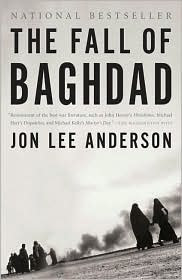
The Fall of Baghdad does not humanize the US soldier, but rather paints the portrait of their enemies. We see the war from the other side of the bombs. A causality of war, especially in the 21st century is the idea that wars are still fought on battlefields. As a child I would gape at photographs of the barbaric battles of earlier wars. The idea of men thrusting themselves at each other in trenches and battlefields seemed absurd. But now, one almost wishes for the good ole days, because at least there was a specific place for the carnage.
Today however, entire society have become battlefields, from Iraq, to Afghanistan, to the Sudan, to the Congo, to Gaza war has slipped the confines of battlefields and has become a way of life for many. Anderson does a superb job of showing us that Baghdad was not and is not simply an empty theater of war, but home to millions of people. A placed that breathes, creates art, gets haircuts, raises children, gets married and ultimately dies on a daily basis.
In addition to trying to understand the “warrior spirit” I am fixated by the idea that societies somehow still function under the curtain of war. I think of my daughter and her many moods and needs: her crankiness when hungry, her need for a complete nap, then I imagine not having water, or diapers, or her tears as bombs pound our house night after night. I think of her delicate spirit crushed beneath so much uncertainty and unnecessary violence. I crumble inside. How can anyone knowingly cause others so much pain? How does a sane human being unleash so much anguish?
Nothing is worth the destruction of a child’s heart. Nothing can justify the destruction of entire societies. No argument for self-defense, no pseudo-liberations, no state interests will ever make the death of entire cultures worthwhile.
I seemed to have rambled a bit more than I had planned. Perhaps your attention span is waning as well, either way, I have run out of energy to discuss Standard Operating Procedure at this time. It deserves more energy than I have. Stay tuned for an upcoming post. Besides I am watching the film tomorrow night. I am sure it will add another layer of insight.
Two of the authors had impressed me before with their fluid and precise prose- Gourevitch with We Wish to Inform You That Tomorrow We Will be Killed With Our Families: Stories from Rwanda and Anderson with his definitive biography of Che Guevara simply called Che. It was refreshing to note that Rolling Stone writer Wright did not disappoint.
I am not sure how these books lined up and happened to all arrive at my house at the same time, but suddenly I realized that I had inadvertently set up a chronologically correct account of the war, by some of my favorite writers. The following is unplanned and perhaps disorganized reflection on the past month.

Generation Kill follows a group of First Recon Marine as they push the tip of the spear into the heart of Iraq during the first days of the invasion. The book begins in Kuwait days before the assault and ends after they arrive in Baghdad.
The Fall of Baghdad seamlessly picks up the tale, by offering a day-to-day account of the days before the invasion right up to the establishment of the Coalition Provisional Authority.
Finally, Standard Operating Procedure paints a haunting picture of the eventual demise and disaster that was Abu Ghraib, the iconic symbol of the failed adventure that was Operation Iraqi Freedom.

The important question is not why did I do choose to dwell on war for an entire month, but what did I learn?
I have always been fascinated and a bit obsessed with war. I remember really struggling with the concept of systematic murder in the eighth grade after watching Platoon for the fiftieth time. The paradox of loathing the men I saw for their weakness, while simultaneously respecting their strength is a phenomenon I still haven’t gotten over. I find the notion of fraternity, honor, and camaraderie very appealing, but I have never been able to understand the warrior mentally that soldiers deem necessary for solidarity. The shear masculinity and violence associated with the armed forces is so foreign and vulgar to me, yet I am obsessed with it.
Wright says in Generation Kill:
What unites them is an almost reckless desire to test themselves in the most extreme circumstances.
The whole structure of the military is designed to mature young men to function responsibility while at the same time preserving their adolescent sense of invulnerability.These displays of heroism are what I find fascinating and relatable.
But then, one Marine in the books says:
I would have loved to have flown the plane that dropped the bombs on Japan. A couple of guys kill hundreds of thousands. That fucking rules!It is this shear ignorance and need for violence that forces me to ask: how do people become so jaded? A comment like that from some one like Hitler or Saddam Hussein is rightfully admonished and considered perverse, but almost completely dismissed when it is said by a nineteen year old Marine from Kentucky. We are asked to support and honor these young warriors, but do we really know who these men are? All three authors repeatedly paint a picture of young men and women lost in their own confusion and rage.
My fascination with war is not about the gory pictures or weapons or strategies, which occupy the minds of most men, I am curious to delve deeper into the human soul and see where the light ends and the darkness begins. I want to try to understand how we create warriors, so we are careful not too do in the future.
Wright paints an impressively objective picture of the life of these Marines. He does not depict them as monsters or animals. We are invited along for the ride and shown how these men grapple with or ignore their personal demons.
I began to see that these men have been bred and trained by generations of people who glorify and promote violence as a means to resolve conflict. Any other form of dealing with conflict is scene as effeminate and ineffective. How do we go about changing this way of thinking? With the largest most powerful military the world has ever known, the United States has spent it’s entire history promoting this warrior culture. One wonders if a non-violent America is even possible. A land forged in genocide has a long way to go, if it ever hope to heal. We have created a culture where any one, who does not magnanimously “support” the troops, is seen as a traitor. But really, how many people take the time to try and understand the troops?
To see that they are a microcosm of the world, forces us to look closely at their behavior and try to understand the source of their rage and emptiness. Because if any person can stomach war and the scenes that come with it:
There’s a man in the road with no head and a dead little girl, too, about three or four, lying on her back. She’s wearing a dress and has no leg.Truly look at it for what it is, then they need our support. War is the ultimate failure of humanity. It is the easy way out. Brute force is the method of unimaginative and backward. Any peace movement worth anything cannot afford to make an enemy of the troops that fight the wars. We must take a closer look at the culture in which we participate and begin to build a world in which young boys and girls would prefer to build homes for their enemies than destroy them. We must give children, both rich and poor as many options as possible, while promoting non-violence over violence in all circumstances.
Perhaps I am wrong. Maybe the world is more like one Marine says in the book:
The fact is people who can’t kill will be subject to those who can.This is the history we have lived since the beginning of man, but for those of us who believe in evolution, hope, peace, love, and the human spirit, there must be something more. Any anti-war movement that hopes to build a lasting peace must find ways to foster and promote these values, before focusing on the political objectives of any government. A government without soldiers willing to kill or die in the name of patriotism and false glory is an impotent one indeed. We need to tend to our soldiers and offer them a reality that sees compassion, kindness, and peace as the path toward honor, glory, and acceptance.

The Fall of Baghdad does not humanize the US soldier, but rather paints the portrait of their enemies. We see the war from the other side of the bombs. A causality of war, especially in the 21st century is the idea that wars are still fought on battlefields. As a child I would gape at photographs of the barbaric battles of earlier wars. The idea of men thrusting themselves at each other in trenches and battlefields seemed absurd. But now, one almost wishes for the good ole days, because at least there was a specific place for the carnage.
Today however, entire society have become battlefields, from Iraq, to Afghanistan, to the Sudan, to the Congo, to Gaza war has slipped the confines of battlefields and has become a way of life for many. Anderson does a superb job of showing us that Baghdad was not and is not simply an empty theater of war, but home to millions of people. A placed that breathes, creates art, gets haircuts, raises children, gets married and ultimately dies on a daily basis.
In addition to trying to understand the “warrior spirit” I am fixated by the idea that societies somehow still function under the curtain of war. I think of my daughter and her many moods and needs: her crankiness when hungry, her need for a complete nap, then I imagine not having water, or diapers, or her tears as bombs pound our house night after night. I think of her delicate spirit crushed beneath so much uncertainty and unnecessary violence. I crumble inside. How can anyone knowingly cause others so much pain? How does a sane human being unleash so much anguish?
Nothing is worth the destruction of a child’s heart. Nothing can justify the destruction of entire societies. No argument for self-defense, no pseudo-liberations, no state interests will ever make the death of entire cultures worthwhile.
I seemed to have rambled a bit more than I had planned. Perhaps your attention span is waning as well, either way, I have run out of energy to discuss Standard Operating Procedure at this time. It deserves more energy than I have. Stay tuned for an upcoming post. Besides I am watching the film tomorrow night. I am sure it will add another layer of insight.
January 19, 2009
Bruised Hands
I have been away for longer than I would have liked. I have been brewing one post after another for the victims of Gaza for a few weeks now. But no words seem to the situation justice so I simply stew and carry on.
I realized late today that today is MLK day in the states, and again, I would love to written an eloquent post about Dr. King and his legacy, but instead I would like to share experts from one of my favorite speeches of his. You can read Beyond Vietnam in its entirety here. While you do, I suggest you change the word Vietnam to Iraq, or Afghanistan, or Gaza for that matter.
 While collectively we may feel war and fuzzy merging Dr. King’s I Have Dream speech with images from the inauguration of our first African-American president, I think it would behoove us as a nation to not lose sight of the points that King makes in this speech:
I end my political hiatus today by recanting Dr. King’s words in hopes that as Obama moves into the White House, he delivers on his promises to the American people. I hope that he has the desire, the power, and the heart to not only listen to and hear these words, but to act upon them. President Obama, let's see what you got!
I realized late today that today is MLK day in the states, and again, I would love to written an eloquent post about Dr. King and his legacy, but instead I would like to share experts from one of my favorite speeches of his. You can read Beyond Vietnam in its entirety here. While you do, I suggest you change the word Vietnam to Iraq, or Afghanistan, or Gaza for that matter.
 While collectively we may feel war and fuzzy merging Dr. King’s I Have Dream speech with images from the inauguration of our first African-American president, I think it would behoove us as a nation to not lose sight of the points that King makes in this speech:
A true revolution of values will soon look uneasily on the glaring contrast of poverty and wealth. With righteous indignation, it will look across the seas and see individual capitalists of the West investing huge sums of money in Asia, Africa, and South America, only to take the profits out with no concern for the social betterment of the countries, and say, "This is not just." It will look at our alliance with the landed gentry of South America and say, "This is not just." The Western arrogance of feeling that it has everything to teach others and nothing to learn from them is not just.
A true revolution of values will lay hand on the world order and say of war, "This way of settling differences is not just." This business of burning human beings with napalm, of filling our nation's homes with orphans and widows, of injecting poisonous drugs of hate into the veins of peoples normally humane, of sending men home from dark and bloody battlefields physically handicapped and psychologically deranged, cannot be reconciled with wisdom, justice, and love. A nation that continues year after year to spend more money on military defense than on programs of social uplift is approaching spiritual death. [sustained applause]
America, the richest and most powerful nation in the world, can well lead the way in this revolution of values. There is nothing except a tragic death wish to prevent us from reordering our priorities so that the pursuit of peace will take precedence over the pursuit of war. There is nothing to keep us from molding a recalcitrant status quo with bruised hands until we have fashioned it into a brotherhood.
This call for a worldwide fellowship that lifts neighborly concern beyond one's tribe, race, class, and nation is in reality a call for an all-embracing and unconditional love for all mankind. This oft misunderstood, this oft misinterpreted concept, so readily dismissed by the Nietzsches of the world as a weak and cowardly force, has now become an absolute necessity for the survival of man. When I speak of love I am not speaking of some sentimental and weak response. I'm not speaking of that force which is just emotional bosh. I am speaking of that force which all of the great religions have seen as the supreme unifying principle of life. Love is somehow the key that unlocks the door which leads to ultimate reality.
I end my political hiatus today by recanting Dr. King’s words in hopes that as Obama moves into the White House, he delivers on his promises to the American people. I hope that he has the desire, the power, and the heart to not only listen to and hear these words, but to act upon them. President Obama, let's see what you got!
January 12, 2009

January 9, 2009
You are Loved
The anger comes in waves. A slow powerful swell that leaves me raw and feeling useless. Then quick jabs. An uppercut. I am numb. The seeds of rage grow into sprouts of hate. It at this moment of the beating that I breathe. Stop.
I scroll through all the images. I read all the words. Starving children sit besides the corpses of their parents. I see Kaia standing there. My eyes flash open. It is too unbearable to imagine. I see her awash in a fear that is beyond the ability of any one person to endure, let alone a child. A lone child. Who will she become without the love of her parents? Watching them bleed away to nothing. Their murders ignored or branded as self-defense.
How did we get here? I push back the hatred. It is in my heart, just like yours that hatred grows. And it is here that we must fight it. Push it back with all our force. I will carry this anger only so far. My back aches with the weight of the world again. My heart goes to the oppressed everywhere they suffer the injustice of hate. But anger does no one any good.
Please do not take my words to mean that we should ignore the anger we feel when we see injustice. Just the opposite, we must acknowledge the anger, carry it a while and feel its weight, find its source. Let it soak into every fiber of our being, but from that soil we must transform it to love.
Love for our enemies, love for the monsters that kill children in their schools. Love for armies who ban medical help for the people they butcher. We must learn to love those that commit evil, because our hatred only fuels their crimes.
Terrified young men assault each other with missiles and bullets, because they were not able to defeat the hatred in their hearts. Broken men, brainwashed with the fantasies of older men follow orders because the fear in their hearts is too much to bear.
How else do you explain neighbors who kill each other’s children over such meaningless things as borders and gods? Lost in ancient stories, these men have forgotten how to create love and spread it to those who beg for it.
All I can do these dark nights is sit with my anger and prick myself wake from the numbness. There is light to shed in my heart still. I hope this light translates from these words and touches someone who may be reading. If not, if I am alone, I know that this light will not simply disappear into the universe. Perhaps somehow my thoughts will find there way to that little girl standing next to her dead mother. And they will simple say, “you are not alone. I am here in your heart. I love you. Let everything else go. You are loved.”
I scroll through all the images. I read all the words. Starving children sit besides the corpses of their parents. I see Kaia standing there. My eyes flash open. It is too unbearable to imagine. I see her awash in a fear that is beyond the ability of any one person to endure, let alone a child. A lone child. Who will she become without the love of her parents? Watching them bleed away to nothing. Their murders ignored or branded as self-defense.
How did we get here? I push back the hatred. It is in my heart, just like yours that hatred grows. And it is here that we must fight it. Push it back with all our force. I will carry this anger only so far. My back aches with the weight of the world again. My heart goes to the oppressed everywhere they suffer the injustice of hate. But anger does no one any good.
Please do not take my words to mean that we should ignore the anger we feel when we see injustice. Just the opposite, we must acknowledge the anger, carry it a while and feel its weight, find its source. Let it soak into every fiber of our being, but from that soil we must transform it to love.
Love for our enemies, love for the monsters that kill children in their schools. Love for armies who ban medical help for the people they butcher. We must learn to love those that commit evil, because our hatred only fuels their crimes.
Terrified young men assault each other with missiles and bullets, because they were not able to defeat the hatred in their hearts. Broken men, brainwashed with the fantasies of older men follow orders because the fear in their hearts is too much to bear.
How else do you explain neighbors who kill each other’s children over such meaningless things as borders and gods? Lost in ancient stories, these men have forgotten how to create love and spread it to those who beg for it.
All I can do these dark nights is sit with my anger and prick myself wake from the numbness. There is light to shed in my heart still. I hope this light translates from these words and touches someone who may be reading. If not, if I am alone, I know that this light will not simply disappear into the universe. Perhaps somehow my thoughts will find there way to that little girl standing next to her dead mother. And they will simple say, “you are not alone. I am here in your heart. I love you. Let everything else go. You are loved.”
January 7, 2009
Doubt is Humbling
A few night ago, I watched Religulous with Bill Maher, and I have been thinking about it ever since. I found a few clips on Youtube that epitomize the themes of the film, but like I always tell my students, one shouldn’t just post Youtube clips without any personal insight as to why the said clip is being shared.
The problem is that I am lazy and don’t really want to take the time to explain why I found this movie in general, and this clip in particular, so damn important. One could argue than, that I should just stew in my own reveries and leave the blog posts to more diligent and thoughtful writers. I can’t do that. I want to try and at least scribe a few paragraphs.
Now before all the religious types get worked up, let me say a few things: I see myself as a spiritual person. I believe that there is a force that runs through the universe and that there is some kind of karmic scale on which our actions are measured. I find myself occasionally in awe of the things that makes our amazing planet function in such a perfect and precise way.
Let me also say that I find the idea of Jesus as some kind beatnik rabble-rouser akin to John Lennon, spreading love and peace in his sandals in the desert very appealing. I love mysticism and the idea of the Gnostics, the Sufis, and what ever Jewish sect skews from orthodox scripture.
My problem is with the rigidity of faith. The idea that there is only one answer, one book, one faith, whatever that idea may be. It is this idea of one group holding all the answers that terrifies me. That is why I think that it is important for non-religious people to speak out and not be afraid of “offending” people. Our time has come to be heard or else we are forfeiting our freedoms, our ideas, our planet, and our future to, let’s be honest- irrational close-minded people.
In short, religion as it has been practiced and is being practiced today is dangerous, “because it allows human beings who don’t have all the answers, think that they do.” I agree with Maher when he says that rational freethinkers need to stand up and not be afraid to offend the faithful. They have steered this ship in the wrong direction for long enough, let us take over for a while.
Take a look at this clip and be sure to watch the film in its entirety it is worth your time.
I also came across this fun little clip about intolerance that I felt was a nice accompaniment to this post:
The problem is that I am lazy and don’t really want to take the time to explain why I found this movie in general, and this clip in particular, so damn important. One could argue than, that I should just stew in my own reveries and leave the blog posts to more diligent and thoughtful writers. I can’t do that. I want to try and at least scribe a few paragraphs.
Religion must die for mankind to liveThis is a hyperbolic statement, there is no doubt about that, but more and more I think people, myself included, are waking up and seeing that the myths in which we have ensconced ourselves are the main reasons why we are heading towards global extinction.
Now before all the religious types get worked up, let me say a few things: I see myself as a spiritual person. I believe that there is a force that runs through the universe and that there is some kind of karmic scale on which our actions are measured. I find myself occasionally in awe of the things that makes our amazing planet function in such a perfect and precise way.
Let me also say that I find the idea of Jesus as some kind beatnik rabble-rouser akin to John Lennon, spreading love and peace in his sandals in the desert very appealing. I love mysticism and the idea of the Gnostics, the Sufis, and what ever Jewish sect skews from orthodox scripture.
My problem is with the rigidity of faith. The idea that there is only one answer, one book, one faith, whatever that idea may be. It is this idea of one group holding all the answers that terrifies me. That is why I think that it is important for non-religious people to speak out and not be afraid of “offending” people. Our time has come to be heard or else we are forfeiting our freedoms, our ideas, our planet, and our future to, let’s be honest- irrational close-minded people.
In short, religion as it has been practiced and is being practiced today is dangerous, “because it allows human beings who don’t have all the answers, think that they do.” I agree with Maher when he says that rational freethinkers need to stand up and not be afraid to offend the faithful. They have steered this ship in the wrong direction for long enough, let us take over for a while.
Take a look at this clip and be sure to watch the film in its entirety it is worth your time.
I also came across this fun little clip about intolerance that I felt was a nice accompaniment to this post:
Subscribe to:
Posts (Atom)